Population Health Management Market by Component (Software, and Services), by Delivery Mode (Cloud Based, On Premise, and Hybrid), by End User (Healthcare Providers, Healthcare Payers, Employer Groups, and Other End Users), and by Application (Chronic Disease Management, Preventive Care, Behavioral Health, Maternal Health, and Other Applications) – Global Opportunity Analysis and Industry Forecast 2024-2030
Industry: Healthcare | Publishing Date: November 10, 2025 | Last Updated: May 15, 2026 | No of Pages: N/A | No. of Tables: N/A | No. of Figures: N/A | Format: PDF | Report Code: HC2145
Population Health Management Market Overview
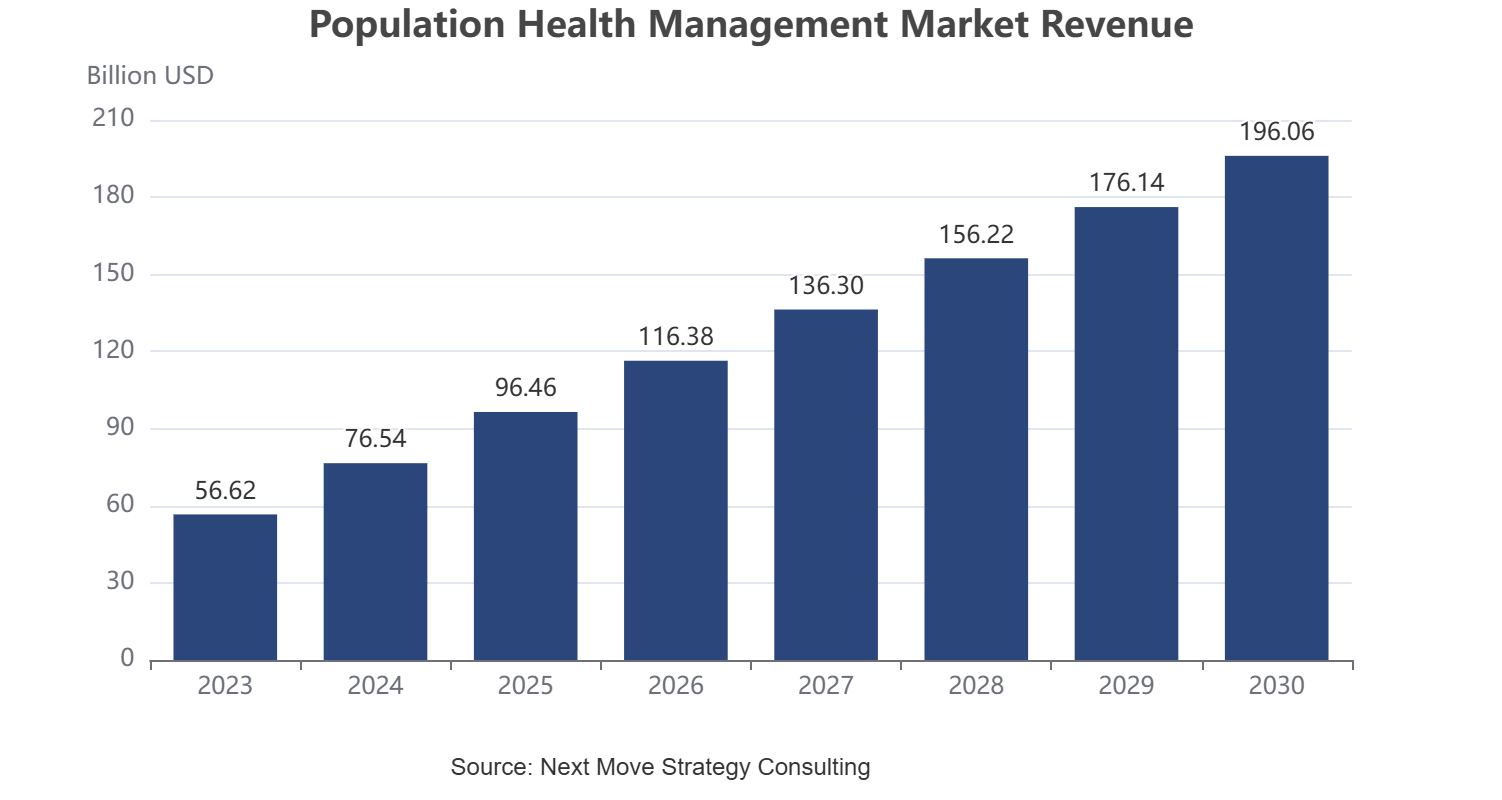
The global Population Health Management Market size was valued at USD 56.62 billion in 2023 and is predicted to reach USD 196.06 billion by 2030 with a CAGR of 19.4% from 2024-2030. The population health management (PHM) market refers to a diverse array of technologies, software platforms, and services aimed at enhancing the health outcomes of specific groups or populations.
It involves strategically coordinating healthcare services to promote wellness, prevent diseases, and manage chronic conditions within these groups. Healthcare organizations utilize technologies such as electronic records and data analysis tools to understand and utilize information to assist patients. PHM vendors offer sophisticated analytics tools that aid in risk assessment and predictive modeling. This enables healthcare providers to allocate resources effectively, enhancing overall population health and reducing healthcare costs.
Market Dynamics and Trends
The increasing prevalence of chronic diseases, such as diabetes and cardiovascular conditions, necessitates the demand for population health industry. PHM helps to provide comprehensive solutions, leveraging data analytics, proactive interventions, and preventive strategies while reducing the burden on healthcare systems.
According to the Pan American Health Organization (WHO), cardiovascular diseases account for most non-communicable diseases. Around 17.9 million people annually, followed by cancers (9.0 million), respiratory diseases (3.9million), and diabetes (1.6 million), globally.
Also, the growing aging population boosts demand for healthcare, particularly in managing age-related problems thus fueling the PHM solutions to efficiently co-ordinate, prioritize interventions, and optimize resource allocation for older adults. According to the World Health Organization (WHO), 1 in 6 people in the world will be aged 60 years or over by the year 2030.
Moreover, the growing advancements in healthcare technology, such as electronic health records (EHRs), telemedicine, wearable devices, and healthcare analytics, have revolutionized PHM. It enables healthcare providers to collect, analyze, and utilize vast amounts of data to identify at-risk populations, personalize interventions, and improve overall population health outcomes.
As an example, Meditech, a healthcare-based company introduced population health tool integrated with Expanse Population Insight to improve EHR by giving healthcare organizations a full picture of their patients' health. It further helps to analyze the combined patient data and focuses to help the healthcare providers to make smarter decisions and create personalized care plans to meet everyone's unique health requirements.
However, the high upfront costs associated with development of infrastructure and technology is hindering the population health management market growth. On the contrary, the integration of Artificial Intelligence (AI) in PHM will create future opportunities as it enhances healthcare services by enabling predictive analytics for identifying at-risk patients focusing upon improving the health outcomes.
Market Segmentations and Scope of the Study
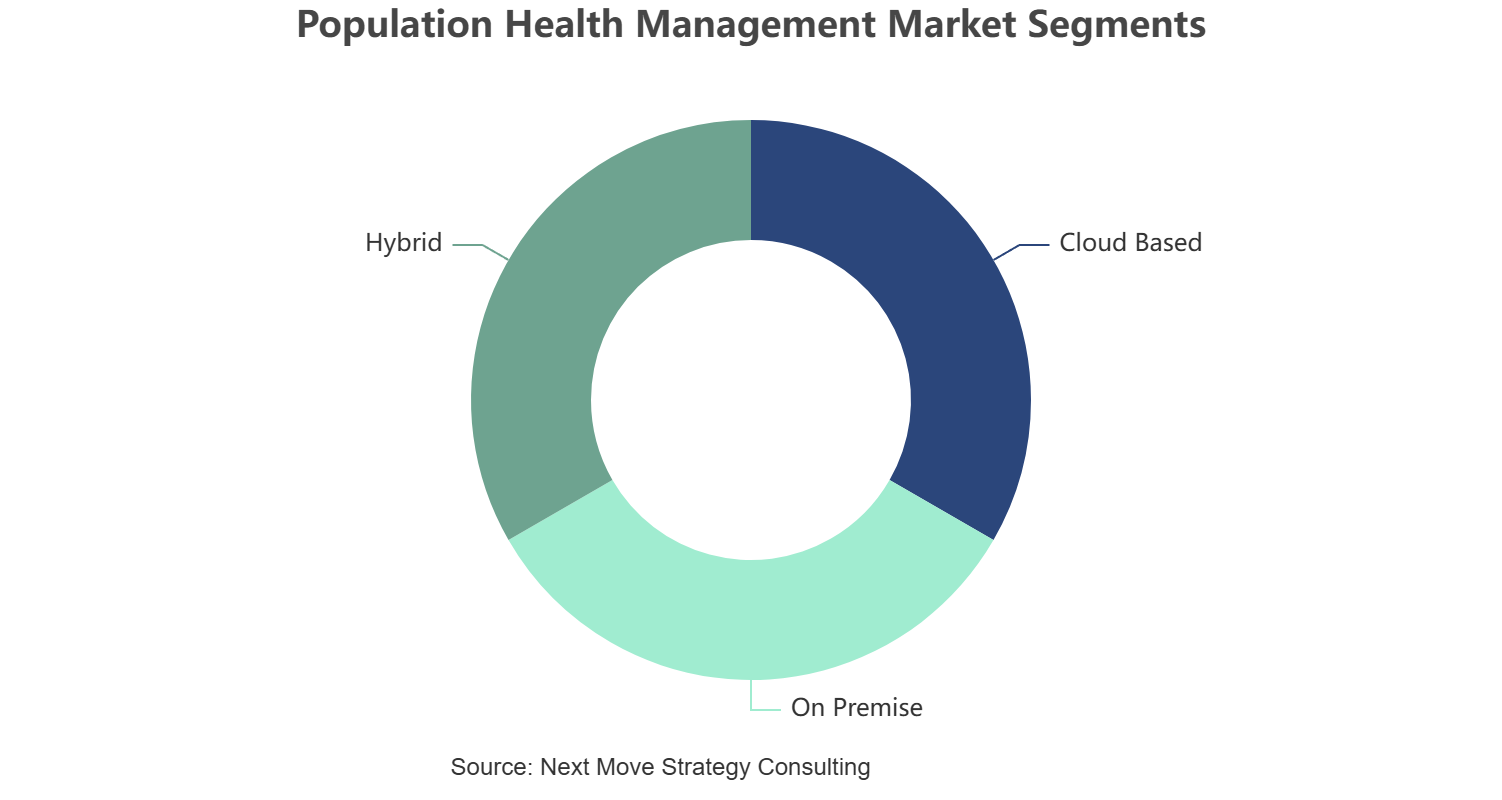
The population health management market report is divided on the basis of product type, delivery mode, end user, and region. Based on product type, the market is divided into software and services. On the basis of delivery mode, the market is divided into on-premise and cloud-based. On the basis of end user, the market is divided into healthcare providers, healthcare payers, and government organizations. Regional breakdown and analysis of each of the aforesaid segments includes regions comprising of North America, Europe, Asia-Pacific, and RoW.
Geographical Analysis
North America dominates the population health management market share at present and is projected to continue its dominance throughout the forecast period. This is attributed to factors such as growing aging population which presents unique healthcare challenges, including the management of chronic diseases and age-related conditions.
PHM solutions are essential for addressing the complex healthcare needs of older adults, optimizing care delivery, and improving health outcomes in this demographic group. As per Pew Research center there are currently about 62 million adults ages 65 and older living in the U.S., accounting for 18% of the population. By the year 2054, an estimated 84 million adults aged 65 and older will constitute approximately 23% of the population.
Also, the increasing chronic disease burden in North America drives the demand for population health management solutions to effectively manage and prevent these conditions through early detection, intervention, and patient engagement strategies. As per Center for Disease Control and Prevention, there is an estimated 129 million people in the U.S., have at least 1 major chronic disease (heart disease, cancer, diabetes, obesity, hypertension).
On the other hand, Asia-Pacific is considered fastest growing region in the population health management industry. This is owing to the increasing burden of chronic diseases such as diabetes, cardiovascular diseases, and respiratory conditions. According to the Indian Council of Medical Research (ICMR), the total number of new cancer cases in India was recorded 1.46 million, with a crude incidence rate of 100.4 per 100,000 individuals. Around one in every nine individuals in India is anticipated to receive a cancer diagnosis at some point in their lifetime.
Also, the governments across the Asia-Pacific region are implementing various healthcare reforms and initiatives to improve healthcare access, quality, and affordability. As per Organization for Economic Cooperation and Development Japan spends USD 5251 per capita on health. This is equal to 11.5% of GDP. There are 2.6 practicing doctors per 1,000 population and 12.1 practicing nurses. Japan has 12.6 hospital beds per 1,000 population.
Competitive Landscape
Various key players in the population health management industry include Epic Systems Corporation, Optum, Inc., Oracle Corporation, Royal Philips N.V., Innovaccer Inc., Health Catalyst, Inc., InterSystems Corporation, Veradigm, Inc., athenahealth, Inc., eClinicalWorks, LLC, NextGen Healthcare, Inc., Arcadia, Inc., Evolent Health, Inc., Azara Healthcare, Inc., Lumeris, Inc., Conifer Health Solutions, Inc., McKesson Corporation, Lightbeam Health Solutions, Inc., Merative L.P., Accenture plc, and others. These market players are opting various strategies such as product launches to maintain their dominance in the global PHM market.
For instance, in October 2025 Optum launched Optum Real, a new AI-powered platform created to streamline the healthcare claims process. The platform is designed to provide real-time insights for both providers and payers, with the goal of improving transparency and efficiency in medical billing and reducing administrative errors.
Moreover, in April 2024, Epic Systems Corporation announced the launch of an AI validation software suite. It aims to equip healthcare organizations with the capability to evaluate AI models at the local level and establish continuous monitoring mechanisms for these systems.
Key Benefits
-
The report provides quantitative analysis and estimations of the population health management market from 2024 to 2030, which assists in identifying the prevailing market opportunities.
-
The study comprises a deep-dive analysis of the current and future population health management market trends to depict prevalent investment pockets in the market.
-
Information related to key drivers, restraints, and opportunities and their impact on the population health management market is provided in the report.
-
Competitive analysis of the key players, along with their market share is provided in the report.
-
SWOT analysis and Porters Five Forces model is elaborated in the study.
-
Value chain analysis in the market study provides a clear picture of roles of stakeholders.
Population Health Management Market Key Segments
By Component
-
Software
-
Platform
-
Enterprise PHM Platform
-
EHR Integrated Platform
-
-
Point Solution
-
Risk Stratification
-
Care Management
-
Patient Engagement
-
Analytics and Reporting
-
Remote Patient Monitoring
-
-
-
Services
-
Implementation and Integration
-
Consulting and Strategy
-
Managed Services
-
Training and Support
-
By Delivery Mode
-
Cloud Based
-
On Premise
-
Hybrid
By End User
-
Healthcare Providers
-
Hospitals and Health Systems
-
Ambulatory Centers
-
Physician Practices
-
-
Healthcare Payers
-
Insurance Companies
-
Government Payers
-
-
Employer Groups
-
Other End Users
By Application
-
Chronic Disease Management
-
Preventive Care
-
Behavioral Health
-
Maternal Health
-
Other Applications
By Region
-
North America
-
The U.S.
-
Canada
-
Mexico
-
-
Europe
-
The UK
-
Germany
-
France
-
Italy
-
Spain
-
Denmark
-
Netherlands
-
Finland
-
Sweden
-
Norway
-
Russia
-
Rest of Europe
-
-
Asia-Pacific
-
China
-
Japan
-
India
-
South Korea
-
Australia
-
Indonesia
-
Singapore
-
Taiwan
-
Thailand
-
Rest of Asia-Pacific
-
-
RoW
-
Latin America
-
Middle East
-
Africa
-
Key Players
-
Epic Systems Corporation
-
Optum, Inc.
-
Oracle Corporation
-
Royal Philips N.V.
-
Innovaccer Inc.
-
Health Catalyst, Inc.
-
InterSystems Corporation
-
Veradigm, Inc.
-
athenahealth, Inc.
-
eClinicalWorks, LLC
-
NextGen Healthcare, Inc.
-
Arcadia, Inc.
-
Evolent Health, Inc.
-
Azara Healthcare, Inc.
-
Lumeris, Inc.
-
Conifer Health Solutions, Inc.
-
McKesson Corporation
-
Lightbeam Health Solutions, Inc.
-
Merative L.P.
-
Accenture plc
Report Scope and Segmentation
|
Parameters |
Details |
|
Market Size in 2023 |
USD 56.62 Billion |
|
Revenue Forecast in 2030 |
USD 196.06 Billion |
|
Growth Rate |
CAGR of 19.4% from 2024 to 2030 |
|
Analysis Period |
2023–2030 |
|
Base Year Considered |
2023 |
|
Forecast Period |
2024–2030 |
|
Market Size Estimation |
Billion (USD) |
|
Growth Factors |
|
|
Countries Covered |
28 |
|
Companies Profiled |
20 |
|
Market Share |
Available for 10 companies |
|
Customization Scope |
Free customization (equivalent to up to 80 working hours of analysts) after purchase. Addition or alteration to country, regional, and segment scope. |
|
Pricing and Purchase Options |
Avail customized purchase options to meet your exact research needs. |
About the Author
 Sikha Haritwal
— Sikha Haritwal is an assistant manager with strong expertise in market research, data analysis, and cross-functional coordination. She plays a key role in leading complex research initiatives, strengthening analytical rigor, and enabling data-driven decision-making across teams. Known for her leadership mindset and structured problem-solving approach, she supports process improvement, enhances operational efficiency, and contributes to building scalable frameworks that drive long-term strategic outcomes and organizational effectiveness.
Sikha Haritwal
— Sikha Haritwal is an assistant manager with strong expertise in market research, data analysis, and cross-functional coordination. She plays a key role in leading complex research initiatives, strengthening analytical rigor, and enabling data-driven decision-making across teams. Known for her leadership mindset and structured problem-solving approach, she supports process improvement, enhances operational efficiency, and contributes to building scalable frameworks that drive long-term strategic outcomes and organizational effectiveness.
About the Reviewer
 Supradip Baul
— Supradip Baul is an accomplished business consultant and strategist with over a decade of rich experience in market intelligence, strategy, technology, and business transformation. His work has included rigorous qualitative and quantitative analysis across multiple industries, helping clients shape investment decisions and long-term roadmaps. Earlier in his career, he was associated with Gartner, where he contributed to industry-leading reports and market share analyses. He has worked with leading global companies and holds an MBA with a dual specialization in Marketing and Finance.
Supradip Baul
— Supradip Baul is an accomplished business consultant and strategist with over a decade of rich experience in market intelligence, strategy, technology, and business transformation. His work has included rigorous qualitative and quantitative analysis across multiple industries, helping clients shape investment decisions and long-term roadmaps. Earlier in his career, he was associated with Gartner, where he contributed to industry-leading reports and market share analyses. He has worked with leading global companies and holds an MBA with a dual specialization in Marketing and Finance.
At Next Move Strategy Consulting, we understand that insightful market research is the cornerstone of successful business decisions. That's why we employ a robust and multifaceted approach, combining various methodologies to deliver the most accurate and actionable data for our clients.

Research Landscape
We navigate the world of research with two primary approaches:
Qualitative Approach
Our qualitative research methodologies involve immersive techniques such as in-depth interviews, focus groups, and observational studies. By engaging directly with individuals and stakeholders, we uncover valuable insights that quantitative data alone may overlook.

Quantitative Research
In tandem with qualitative methodologies, NMSC leverages the power of Quantitative Research to provide a robust foundation of numerical insights. Through systematic data collection and analysis, we quantify patterns, preferences, and market trends, offering a comprehensive view of the business landscape.
Our quantitative research approach employs diverse tools, including surveys, experiments, and statistical modelling. These methodologies enable us to gather data from a large and representative sample, ensuring the statistical significance of our findings. By employing structured questionnaires and standardized data collection methods, we guarantee the reliability and validity of the information we present to our clients.
Quantitative research is particularly effective in measuring the prevalence of trends, assessing market size, and gauging the impact of various factors on consumer behavior. The numerical precision attained through this approach equips our clients with actionable insights, facilitating data-driven decision-making and strategy formulation.


Our Specialized Toolbox for Industry-Specific Market Research
We deploy a specialized arsenal of techniques tailored to meet your unique requirements. Here's a glimpse into our comprehensive toolbox:

Information Procurement
The stage entails acquiring market data or relevant information through various sources and methodologies.


Market Research Approach
We utilize both top-down and bottom-up approaches in market research analysis to achieve a comprehensive understanding of the market dynamics, leveraging the broad perspective of industry trends and macroeconomic factors alongside detailed insights from specific segments and individual companies.

Porters Five Forces Analysis
We conduct Porter's Five Forces analysis to evaluate the competitive landscape of an industry, providing us with insights into factors that affect profitability and strategic positioning.

SWOT Analysis

Forecasting
We utilize a forecasting model to predict future consumption by considering parameters like population, economics, regulations, market competition, drivers, constraints, technology, and pricing. We also employ statistical techniques such as multilinear regression, exponential smoothing, moving average, ARIMA, and Monte Carlo simulations for accurate predictions. In econometric forecasting, we analyzed short-term and long-term event impacts, attributing values based on regulatory frameworks, economic factors, and market events.


 Speak to Our Analyst